Use case 06
Walk in with the artifact, not a workshop
For SI & consulting partners
Published · By Junil Kim, CEO & Co-founder
The interview layer is a cost center. The firm that shows up with the as-recorded process map has already replaced it.
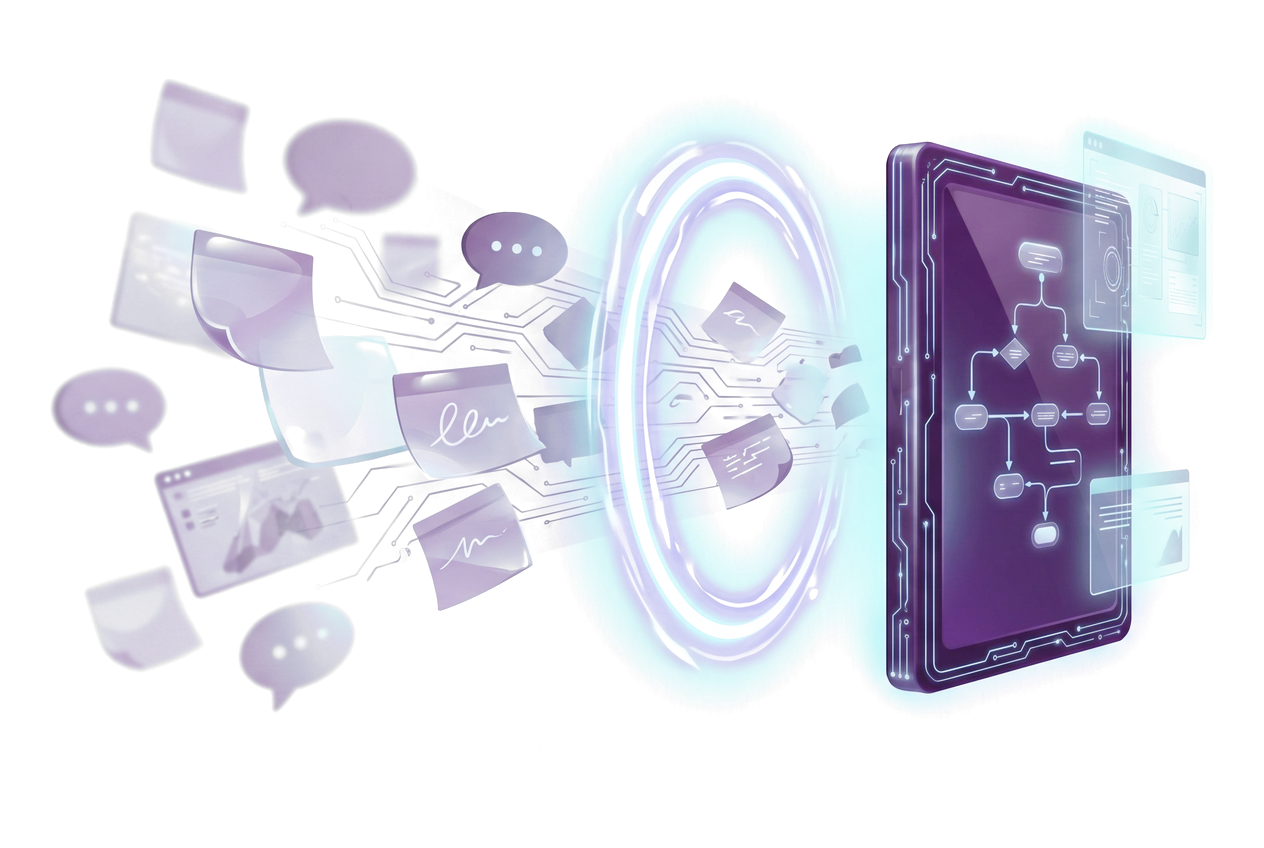
For delivery teams, Aperture records how the client's work actually runs, inside systems and between them, and turns that evidence into the current-state artifact the ERP discovery phase normally spends its first weeks reconstructing. Underneath it is an AI-native operations tool: we map how the work actually runs first, then deploy agents inside the files the work already lives in. This post is about the first step.
Every ERP, HCM, or process-improvement engagement begins the same way: workshops. Gather the client's people, walk the process on a whiteboard, write it down, circulate for corrections, repeat.
The output is the current-state map every downstream decision depends on. The problem is what it costs to produce, and what it still misses.
Why is the discovery phase a cost center?
Discovery is the part of the engagement clients resent paying for. From their side, they are billed for weeks of their own staff explaining their own process back to them. From the firm's side, the hours are real, the margin is thin, and much of it burns before the SOW is even signed, in pre-sales scoping and requirements gathering workshops run to win the proposal.
And after all that, the map is a reconstruction: work as believed, not work as recorded. People describe the standard path and forget the exceptions, the Excel handoffs, and the workarounds that carry the actual volume. The engagement then rediscovers them mid-delivery, where they surface as change orders and slipped milestones instead of line items in the original scope.
How long does the ERP discovery phase take?
Requirements gathering alone typically runs 4 to 8 weeks at mid-market companies and 8 to 16 weeks at enterprises, according to ERP Research. That is the window Aperture compresses: capture runs while the client's team works, and six weeks of discovery becomes days of structured specs, before the first workshop is booked.
What changes when the proposal is scoped against recorded work?
With Aperture, capture runs while the client's team simply does their job. The recorded evidence becomes named workflows, with trigger, steps, actors, systems, exceptions, and durations, before the first workshop is booked.
That changes the RFP conversation. Every competing bid is scoped from the same workshops and the same guesses. The team that walks in with the current-state process map is scoping against how the client actually works, pricing the exceptions everyone else will discover later, and demonstrating the depth of understanding a workshop cannot fake. The proposal is priced from an as-is process baseline, not a guess.
What does delivery start with on day one?
Instead of a stack of workshop notes, the delivery team starts with the artifact set:
- A workflow specification for each process in scope: trigger, completion condition, ordered steps, decision points, and the tribal-knowledge dependencies nobody had written down.
- Automation and fit scoring per workflow, so the roadmap is sequenced by evidence rather than by whoever spoke loudest in the workshop.
- An eval set derived from real captured traces, so any build, yours or the client's, can be validated against how the work actually ran.
The workshops that remain become what they should have been all along: sessions to confirm and decide, not to reconstruct. You can see the artifact set from a live engagement.
Does this replace the consulting team?
No. It replaces the cheapest-to-automate layer of their work. The judgment that makes an engagement valuable, deciding what to change, what to build, and how to sequence it, still belongs to the team. Aperture removes the weeks of transcription that stood between the team and that judgment.
If discovery is eating your delivery margin, or your proposals are scoped from workshops you ran for free, that is the scoping problem we built Aperture around. Talk to the founders.