Use case 01
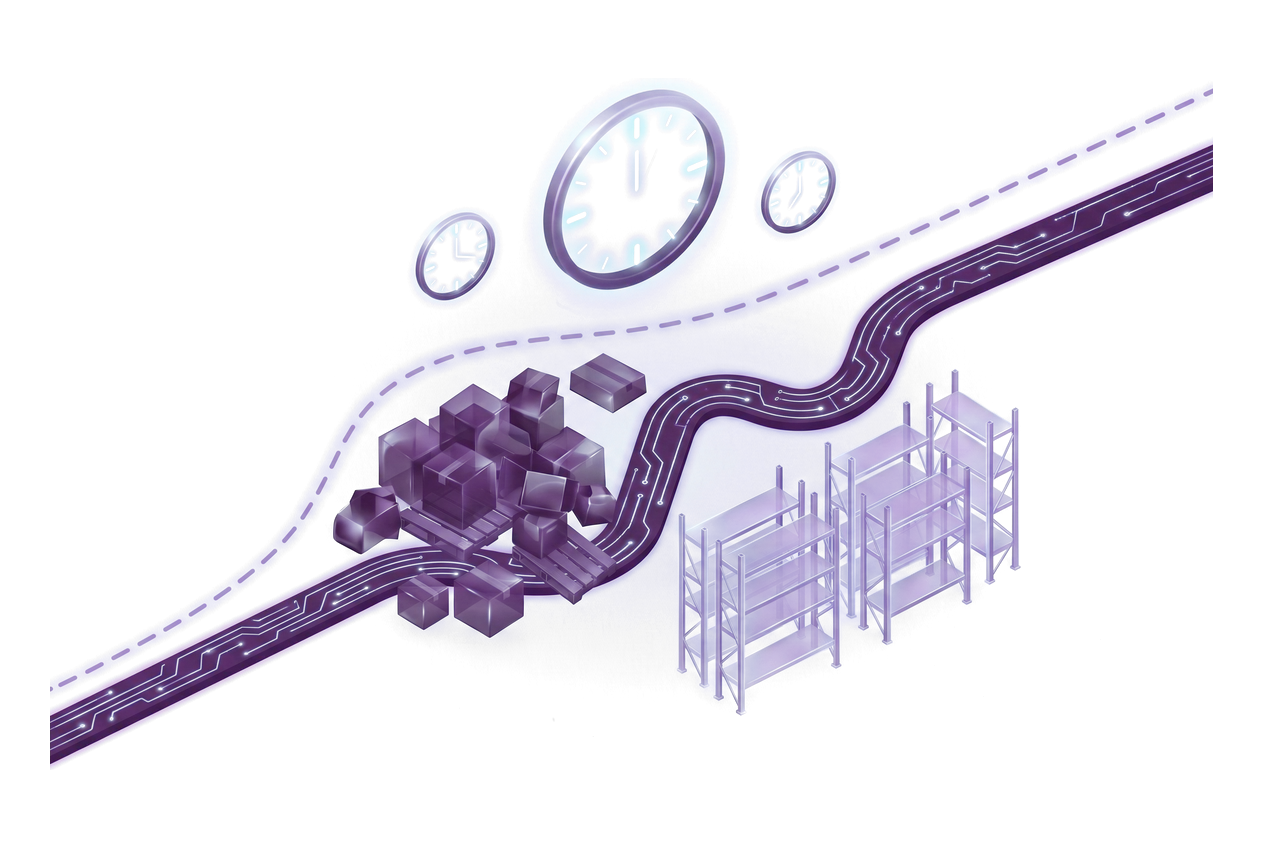
Find the gap between plan and reality
For CPG supply chain & S&OP leaders
Published · By Junil Kim, CEO & Co-founder
The supply plan was committed months ago. The demand truth arrived this morning.
The S&OP plan vs actual gap is the variance between what the plan committed and what demand, production, and procurement actually did. It rarely starts in the forecast. It is created in the handoffs between functions, and it hides there until the numbers stop matching.
Aperture is an AI-native operations tool. We map how the work actually runs first, then deploy agents inside the files the work already lives in. For S&OP teams, that first step records how planning work actually runs across people, spreadsheets, and business systems, and produces an evidence-based map of the handoffs, exceptions, and delays between the committed plan and actual demand.
The channel confirms a promotion one week ahead. Sometimes one day ahead. Production was committed three months ago.
Nobody in that chain is negligent. The clocks simply do not match.
Every consumer goods company lives with some version of this problem. Retail moves weekly, production monthly, and procurement quarterly. By the time the plan reaches the people executing it, reality has already moved on.
Where does the cost of plan-versus-actual variance hide?
The cost rarely appears as a line item. It accumulates in the handoffs between functions.
A planner facing uncertainty rounds up. A stockout is visible; excess stock is not. So forecasts grow slightly as they move toward the purchase order. Uncertainty becomes inventory. Inventory becomes write-offs, storage costs, and trapped cash, with no single decision to blame.
Meanwhile, every function keeps its own version of the truth. Sales has one number, planning another, and the warehouse a third. None is necessarily wrong. Each reflects a different moment in time, and none of them is the ground truth of how the work actually ran.
Why do S&OP meetings spend so much time reconstructing the past?
Reconstruction.
The meeting that is supposed to reconcile plan and reality spends its first hour reconciling versions of the story. Whose export is newer? What does this column mean? What actually happened to the March order?
By the time the room agrees on last month, there is little time left to decide what to do next month. The meeting ends with action items about data hygiene instead of decisions about the business.
McKinsey found that, for two-thirds of organizations in its data set, IBP meetings function as periodic business reviews rather than continuous decision cycles. When the operating evidence is fragmented, the meeting defaults to reviewing what happened instead of correcting what happens next. The room is comparing maps of the work as believed, not as recorded.
Isn't this what S&OE is supposed to fix?
Partly. Sales and operations execution (S&OE) gives you a weekly cadence for managing plan vs actual variance after it appears. It does not tell you where the variance is created.
Until you can see the handoffs, the re-keyed spreadsheets, and the undocumented workarounds that turn a good plan into a different reality, S&OE is a faster way to firefight. The fix starts one level deeper, in the workflow itself.
What is an as-run S&OP workflow map?
Aperture records the planning loop as people actually run it: where a demand signal lands, which spreadsheet re-keys it, where it waits for approval, and which workaround bridges two systems that were never integrated.
The result is an as-run map of the planning loop, showing every handoff, exception, and workaround, with the time each one consumes. Not the process described in the SOP. The process that ran last week.
"I want the plan and reality to exchange corrections flexibly."
VP Operations, consumer-goods brand · translated
That sentence captures the job. For plan and reality to correct each other, both sides need a shared map they trust: one current enough to challenge and improve.
The recorded loop gives the S&OP meeting that starting point. The conversation begins with evidence, not reconstruction.
Where can you see an example?
We built exactly this inside a PE-backed consumer goods company: a four-week diagnosis that produced the current-state workflow map of the planning loop, from demand signal to purchase order. You can read what the map uncovered here, or see how workflow mapping for CPG supply chains works more broadly. Our field notes on operational debt collect what the gap between plan and reality costs inside consumer goods companies.
If your S&OP meeting spends more time agreeing on what happened than deciding what to do next, that is the meeting we built Aperture for. Talk to the founders.